
Denture in Rockhampton
Personalised denture care, free initial consultations and advanced CQR technology to create customised dentures tailored to your individual needs.
Book your FREE initial Consultation*
Thank you for contacting Precise Dentures.
We will get back to you as soon as possible.
Oops, there was an error sending your message.
Please try again later.
Precision Dentures
CQR Complete Dentures
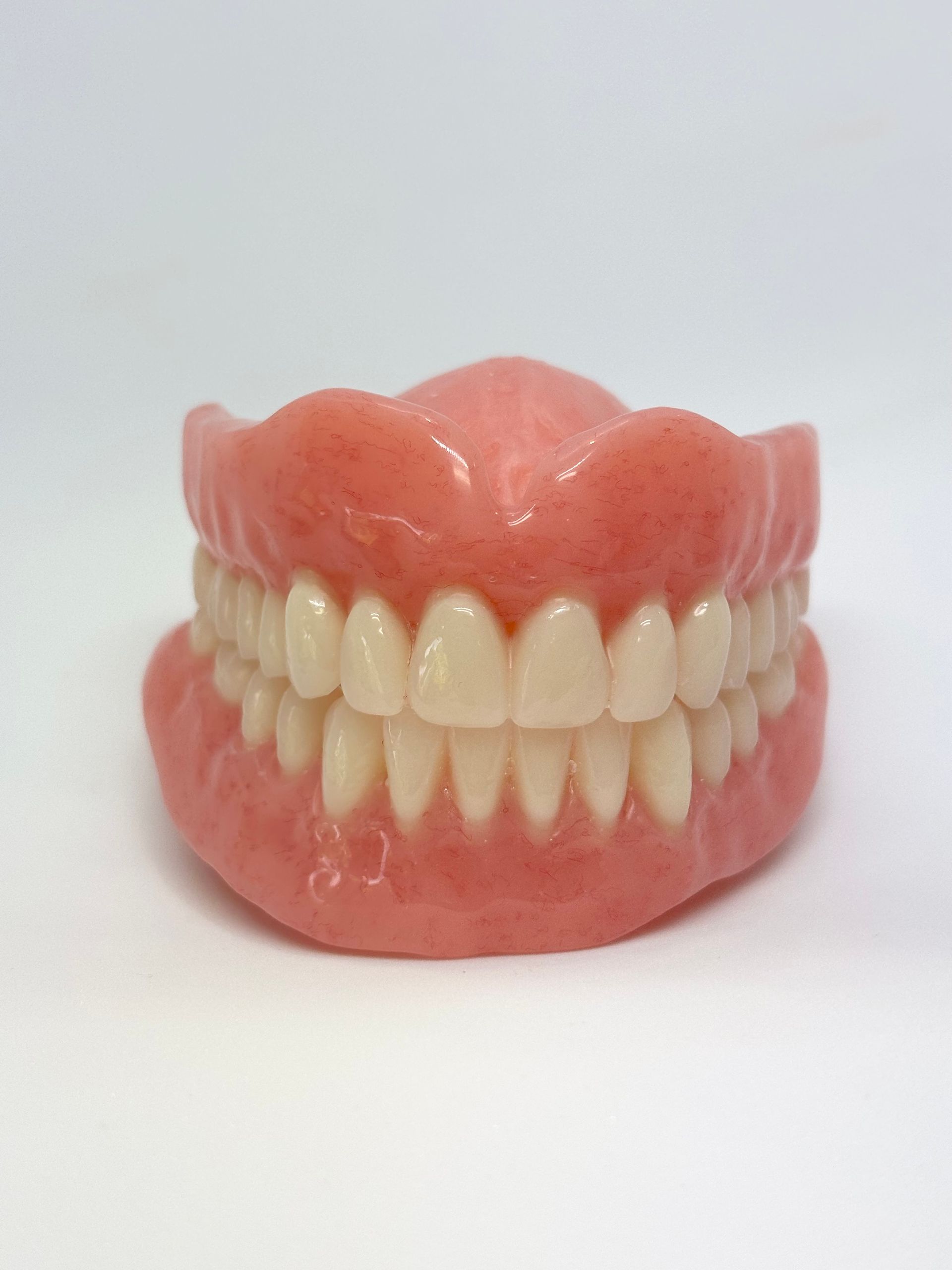
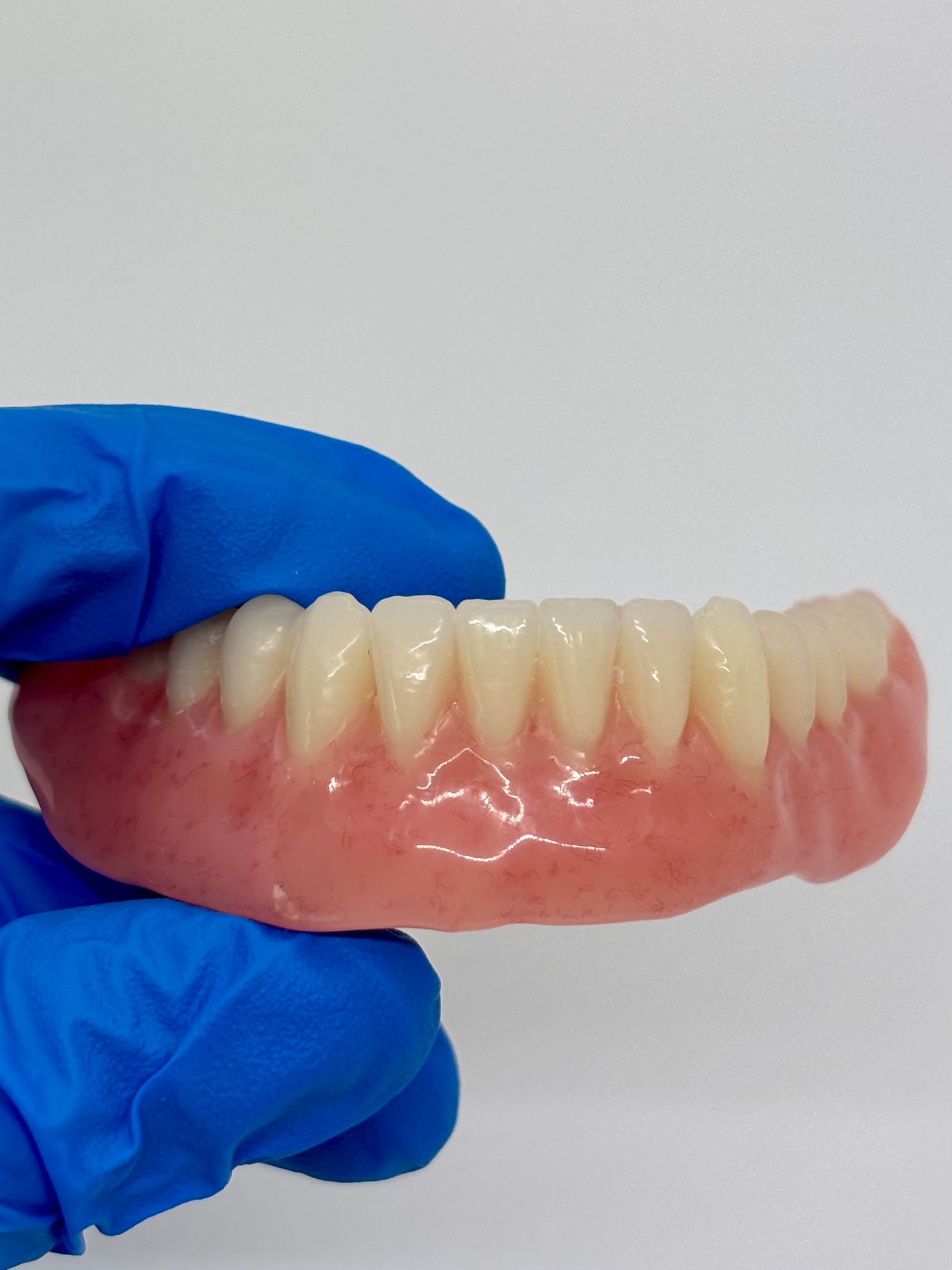
At Precise Dentures, we offer the CQR Complete Denture System for patients requiring full upper and lower dentures. Developed through research by dental professionals and scientists, the CQR system uses a construction approach that considers each patient’s individual jaw movements during the denture design process.
The CQR system is designed to provide a personalised denture that supports comfort, stability and everyday function. By incorporating aspects of an individual’s jaw movement and neuromuscular patterns, the denture is intended to work in harmony with natural movement where appropriate.
As with all denture treatment, outcomes vary between individuals and depend on factors including oral anatomy, existing bone and soft tissues, adaptation to dentures and ongoing care. During your consultation, your dental prosthetist will assess your needs and discuss whether the CQR Complete Denture System is a suitable option for you.
Immediate Dentures
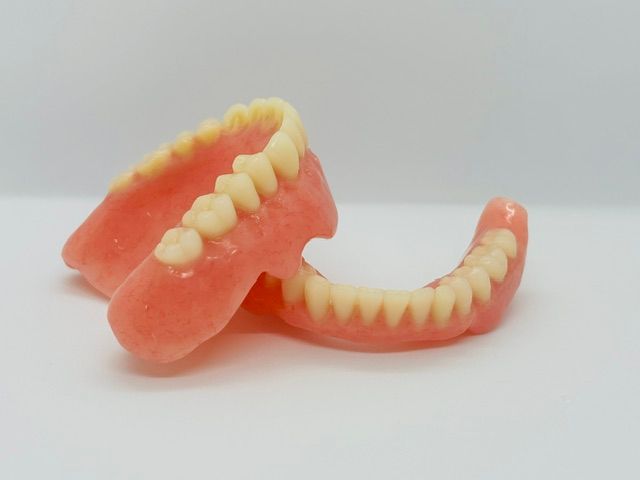
In situations where the extraction of some or all of your teeth is unavoidable, immediate dentures provide an effective solution to maintain your appearance and oral function. Our team at Precise Dentures takes impressions of your existing teeth and gums before the extraction process to create custom-fitted immediate dentures.
During your extraction appointment, your dental surgeon will insert the immediate dentures, helping provide a smooth transition during healing. These dentures not only protect the extraction sites but may also reduce the number of dental visits required, making the entire process more convenient and efficient. As your healing progresses, regular check-ups and maintenance with our team will help maintain the comfort and fit of your dentures.
Partial Dentures
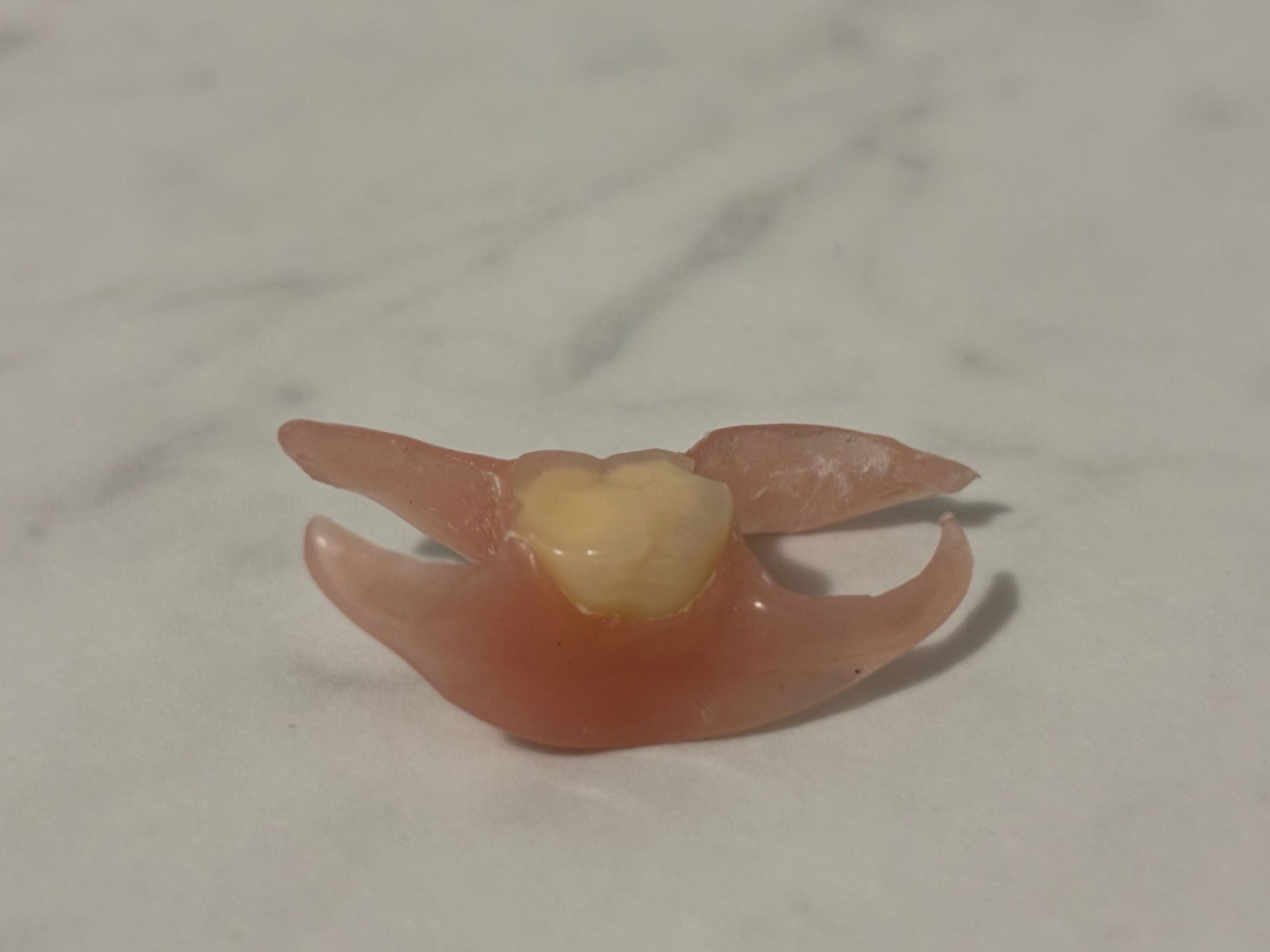
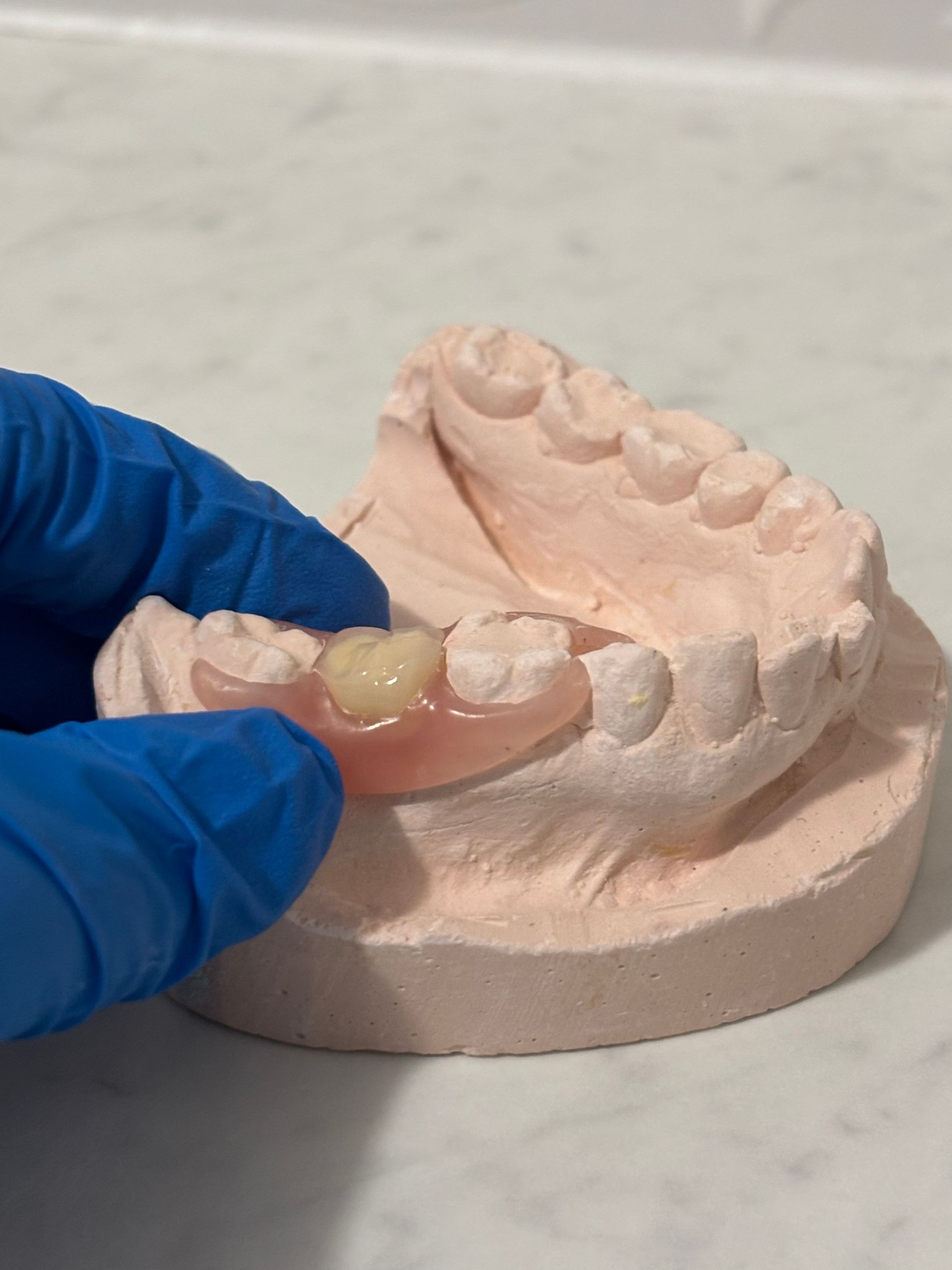
A partial denture is a removable appliance replacing one or more missing natural teeth and associated tissues. The natural remaining teeth and gums support it. A partial denture replaces what is lost and preserves what is left. Basically, removable partial dentures come in three types - acrylic, flexible or chrome. The type suited to your particular requirements will be assessed at your consultation with Dev.
Implant Dentures
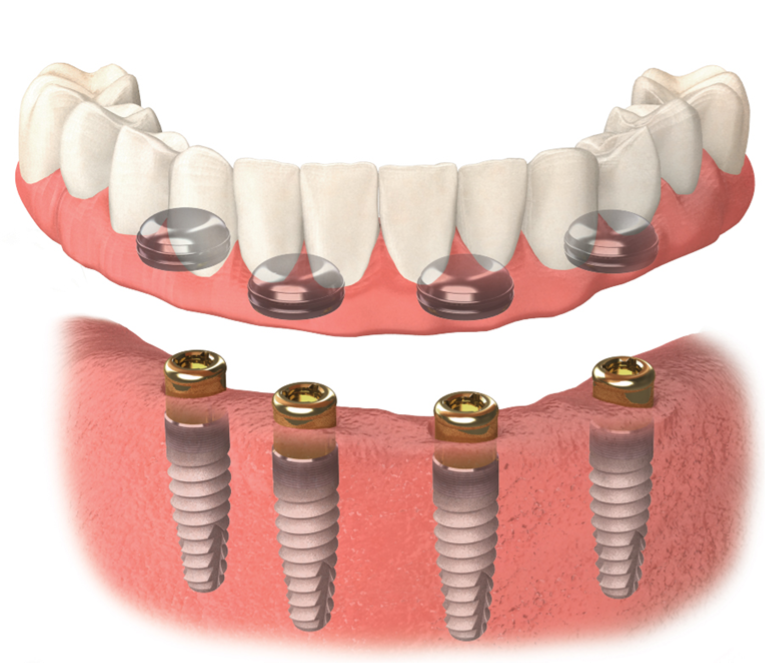
A denture implant is a small, sturdy titanium post that serves as a substitute for the root structure of a natural tooth. These implants are placed into your upper or lower jaw bone, creating a secure foundation for your over-denture.
As the bone grows around the implant, it firmly holds the denture in place, similar to how roots secure natural teeth. Implant-supported dentures may help reduce bone loss compared with conventional dentures, making it easier to chew, eat, talk, and smile more confidently, depending on the individual’s oral health and treatment plan. They are designed to provide greater stability, improved comfort and a more natural feel without the need for messy glues or pastes. Dental implants are designed as a long-term treatment option. They require the same maintenance as natural teeth, including regular brushing, flossing and dental check-ups.
Denture Relines
Denture relining is a procedure where the top part of the denture, where the dentures come into contact with your gums, is replaced with a new lining—contoured to your gum line. The longer you wear dentures, the more your gums change and the looser your dentures get.
Relining gives you a better fit, minimising your dentures moving around or rubbing painfully against your gums. In order to restore the snug fit and prevent the build-up of flabby gum tissue under your dentures, you should visit your denture prosthetist at least every two years.
Denture Adjustments
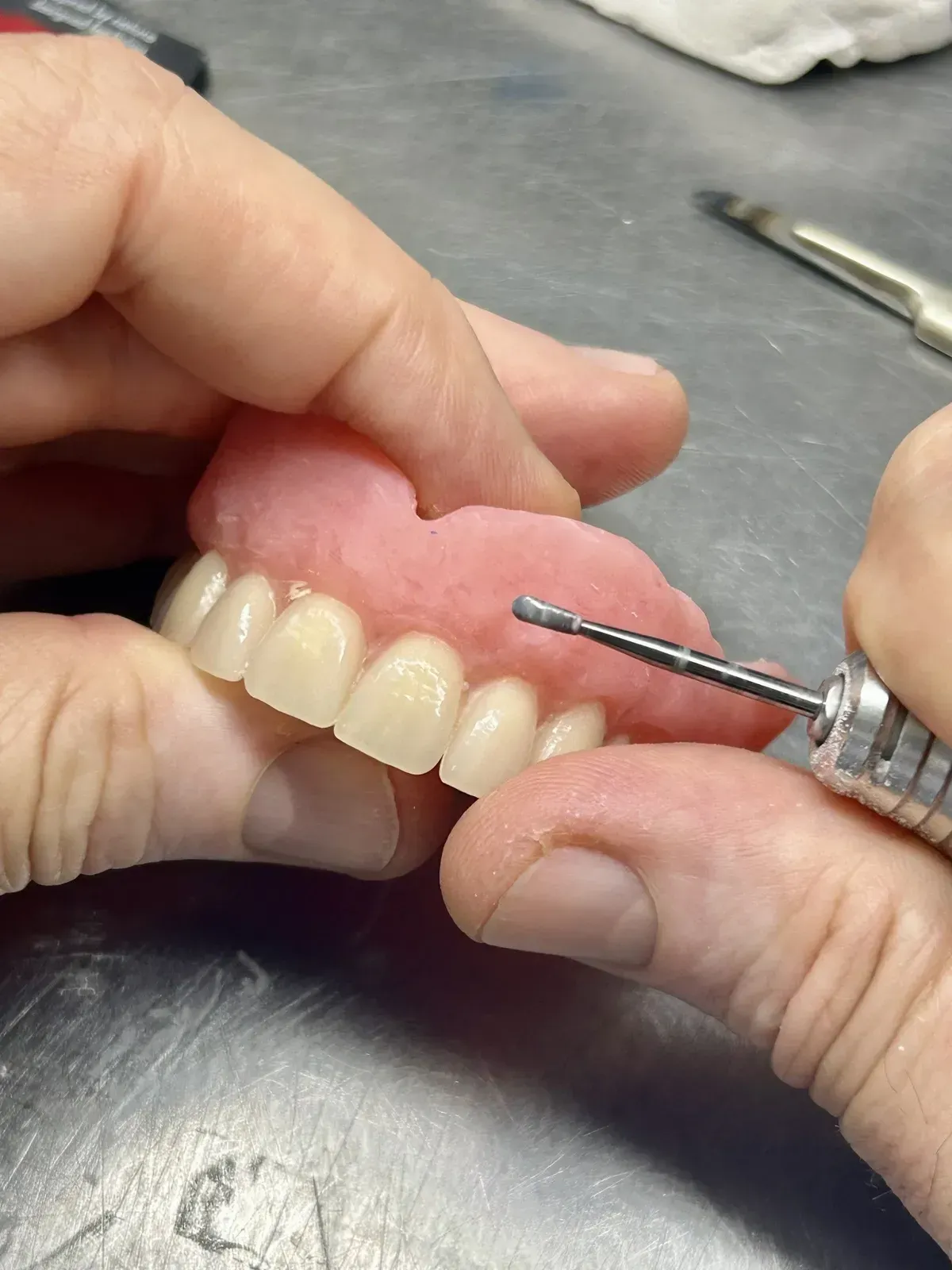
Gum tissues are in a constant state of change, but dentures are not; therefore, as time passes, you may experience sore spots months or years after the initial fitting. This is the first sign that your gums have changed. We suggest you make an appointment to have your denture adjusted and checked.
Denture Repairs
Broken dentures should only ever be repaired by someone who is trained and qualified to carry out the repair. If your dentures are broken, Dev and his team can quickly repair your dentures. As a complete denture repair service, we will:
- Repair cracked denture bases & multiple fractures
- Repair chipped false teeth
- Replace your damaged or broken denture teeth with new denture teeth
Repairs & Additions
If natural teeth are subsequently lost or extracted, it is normally possible to add additional artificial teeth to your partial denture as a temporary measure. For most repairs, we offer same-day service.
For emergency denture repairs, please call us today on
(07) 4926 2296.
Send Us a Message
Thank you for contacting Precise Dentures.
We will get back to you as soon as possible.
Oops, there was an error sending your message.
Please try again later.
Frequently Asked Questions
What should I do if my dentures crack or break?
Call your Dental Prosthetist immediately. Normally, dentures can be repaired quickly, often on the same day. Damaged dentures can cause additional oral health problems, so you need to see your DP right away.
Never attempt to repair dentures yourself. Glues often contain harmful chemicals and are not effective in the proper repair of dentures. Denture self-repair can cause irreparable damage and may result in the need for a new denture. They require professional repair and adjustment to fit your mouth.
Will my denture need adjusting?
Over time, adjusting the denture may be necessary. As you age, your mouth naturally changes, which can affect the fit of the denture. Your bone and gum ridges can recede or shrink, resulting in a loose-fitting denture. Dentures that do not fit properly should be adjusted. Loose dentures can cause various problems, including sores or infections. Seek advice promptly if your denture becomes loose.
Don’t assume regular denture care is too costly. Before deciding that regular denture care is too costly, discuss the situation with your Dental Prosthetist. Ask about charges for denture adjustments, repairs and possible replacement. Keep in mind that if you are in your 60s, you are likely to have 20 more years of talking, eating and smiling. Your oral health is a vital part of your total health.
How do I clean my dentures?
When cleaning your dentures, you should first rinse away loose food particles thoroughly. Then moisten your toothbrush and apply Yellow Sunlight Soap. Brush every surface, scrubbing gently to avoid damage. It is best to clean your denture over a basin filled with water; therefore, if it slips from your hand, the water will slow its descent into the basin and prevent it from hitting a hard surface and possibly causing it to break.
If you have a Resilient (Rubber) Lining on your lower denture, it is important to soak them daily for at least 30 minutes but no more than 1 hour to ensure that the lining stays clean of small white spots, which is a build-up of calculus which can irritate your gums and will cause soreness and ulcers. From time to time, your dentures may require to be cleaned professionally in the laboratory.
Will it be difficult to eat with a denture?
Replacing missing teeth should make eating a more pleasant experience. Start out by eating soft foods that are cut into small pieces. Chew on both sides of the mouth to keep even pressure on the denture. Avoid foods that are extremely sticky or hard.
“My last set of dentures lasted me 25 years….”
This is a common remark by many denture wearers; unfortunately, even though they lasted 25 years, you may have experienced gradual changes in your oral tissues without noticing.
We find all too often that people who have been wearing the same dentures for many years may still feel that their dentures fit… however, the truth is that the soft tissue and gums may become flabby (hyperplastic), red or swollen and quite misshapen to accommodate the denture. In extreme cases, hyperplastic tissue may need to be surgically removed.
Relining or making new dentures while the gums and tissues are in such poor condition will only result in the same problems with the new appliance.
Do dentures need to be replaced?
Dentures don’t last forever… Nothing does. Your mouth slowly changes as you age. People without natural teeth commonly experience gradual loss of jawbone over time. As our jawbone shrinks, so do our gum tissues (sometimes referred to as ridges). Jawbone and gum tissues gradually shrink over time following tooth loss.
These gradual changes, coupled with the gradual changes in your denture, explain why you should visit your denture professional regularly. As a result, many dentures require replacement or refitting approximately every 8–10 years, although the appropriate timing varies depending on the individual. Relining is generally recommended every 3-5 years to accommodate the normal shrinkage of your gums and bones. Even if your dentures fit comfortably, you should still see a denture professional regularly. Why? Mouth tissues can reveal signs of diseases, such as diabetes, that first manifest themselves in the mouth. Besides checking your dentures, Dev will also check for signs of oral cancer and other diseases and examine your gum ridges, tongue and jaw joints. If any concerns are noticed, the appropriate medical or dental referral will be arranged.
What should I do if my new denture is uncomfortable?
The keyword to success with your new dentures is PERSEVERANCE. Dev will never expect you to tolerate pain or soreness, but it is important to leave your new denture in your mouth as long as you can for the first few days and not take it out for any reason other than it is causing pain or that it requires cleaning.
Many sore spots improve within the first few days; however, if they persist, we suggest that you call the clinic and arrange an appointment to have your dentures adjusted.
What materials do you use for the fabrication process?
At Precise Dentures, we carefully select quality materials from established dental manufacturers to help fabricate durable, natural-looking dentures. Every denture is individually designed and handcrafted to suit each patient’s oral anatomy, functional needs and aesthetic preferences.
To process the denture base, we use the SR Ivocap® injection moulding system. This manufacturing process uses continuous injection during polymerisation to produce a dense, accurately processed acrylic denture base.
Some of the features of this system include:
✔ Designed to achieve an accurate fit.
✔ A dense, non-porous acrylic surface that is easy to clean when cared for correctly.
✔ Improved strength and durability compared with conventional processing methods.
✔ High-quality acrylic designed to help provide a natural-looking appearance.
✔ Materials selected to support long-term comfort and function.
For our denture teeth, we use EnigmaLife® & Ivoclar denture teeth. These denture teeth are designed with layered shading and surface characterisation to create a natural appearance. Their optical properties help reproduce the light reflection, translucency and vitality commonly seen in natural teeth, allowing us to achieve an aesthetic result tailored to each individual.
During your consultation, Dev will discuss the materials available (more materials available) and recommend the most appropriate option based on your clinical needs, preferences and treatment goals.